Some rooms smell pleasant. Others smell luxurious. The difference is real, and it is not simply a matter of spending more money on a candle.
Understanding what actually creates a genuinely premium fragrance experience — in a hotel lobby, a high-end retail space, or a well-considered home — is the first step to achieving it yourself.
It Starts with the Fragrance Itself
Not all fragrances are created equal, and the difference between a premium fragrance and a cheap one is immediately apparent to anyone who has experienced both.
Premium fragrances are complex. They have top notes — the first impression you get when the fragrance is diffused — middle notes that emerge as the top notes settle, and base notes that provide depth and longevity. This layered structure is what makes a fragrance feel rich and interesting rather than flat and one-dimensional.
Premium fragrances are also formulated for performance at low intensities. A fragrance that smells good at full strength but becomes harsh or synthetic when diluted is not a premium fragrance. The best fragrances are designed to be experienced subtly — to influence mood without announcing themselves.
The fragrance families that most reliably produce a luxurious impression are woody and musky compositions: sandalwood, cedarwood, vetiver, white musk, and amber. These scents feel warm, grounded, and genuinely premium. They have the depth that makes a space feel inhabited and cared for rather than simply scented.
The Delivery Method Matters More Than Most People Realise
The most common mistake in home fragrance is choosing a beautiful fragrance and then delivering it through a method that undermines it.
Candles are atmospheric and beautiful, but they produce an uneven fragrance experience. The scent is intense near the flame and absent across the room. The heat also alters the fragrance molecules, producing a simplified version of the original scent.
Reed diffusers are passive and slow. Their output varies with temperature and airflow, which means the fragrance experience is inconsistent — stronger on warm days, weaker in winter, affected by whether a window is open or closed.
Ultrasonic diffusers add water vapour to the air alongside the fragrance, which increases humidity and can leave residue on surfaces. The fragrance is also diluted by the water, which reduces its complexity and presence.
Cold-air diffusion is the technology used in luxury hotels, premium retail environments, and high-end automotive showrooms. It atomises pure fragrance oil into microscopic dry particles — typically one to three microns in diameter — without any heat or water. These particles remain suspended in the air, distributing evenly throughout a space and delivering the fragrance as it was formulated, with its full complexity intact.
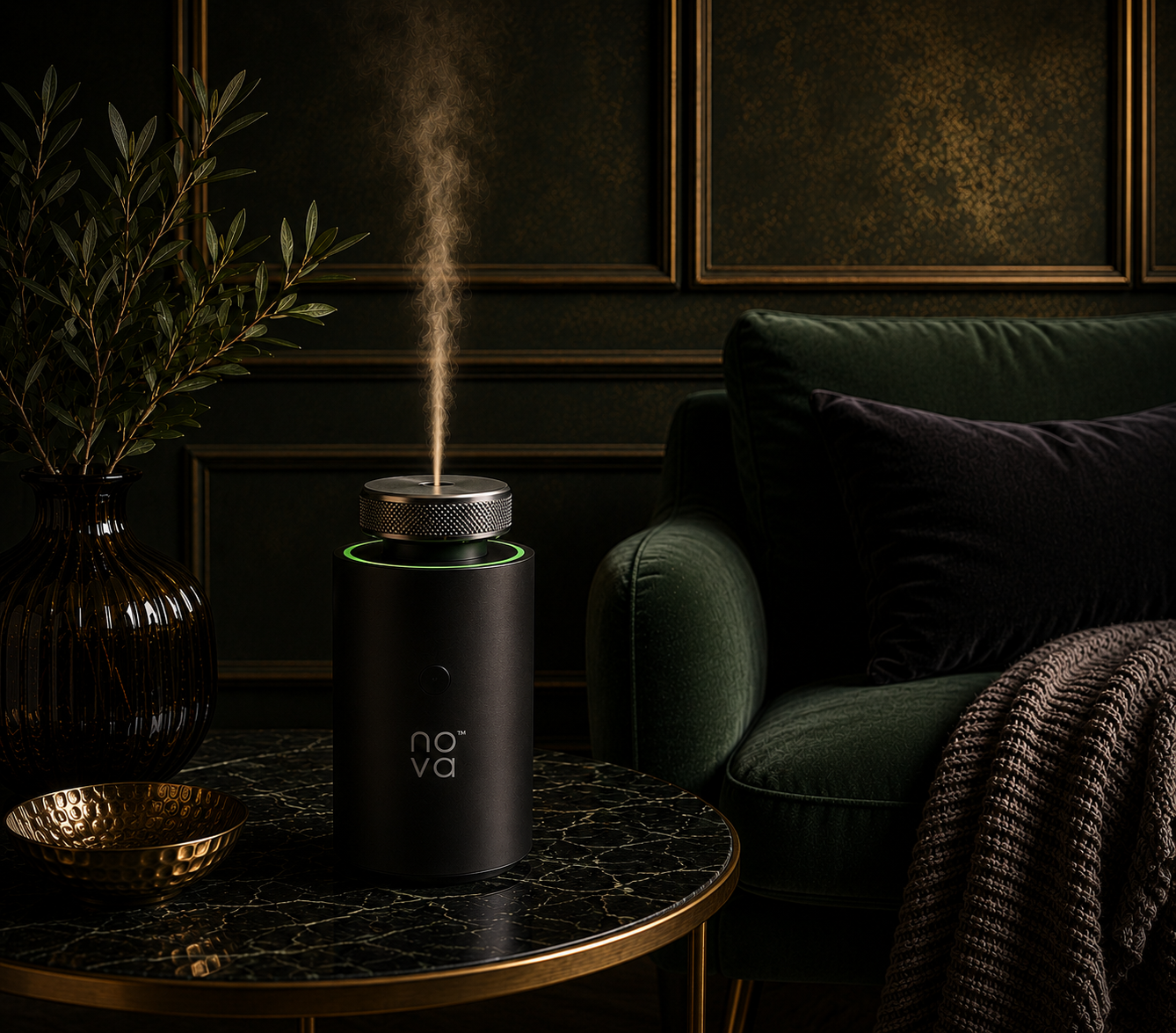
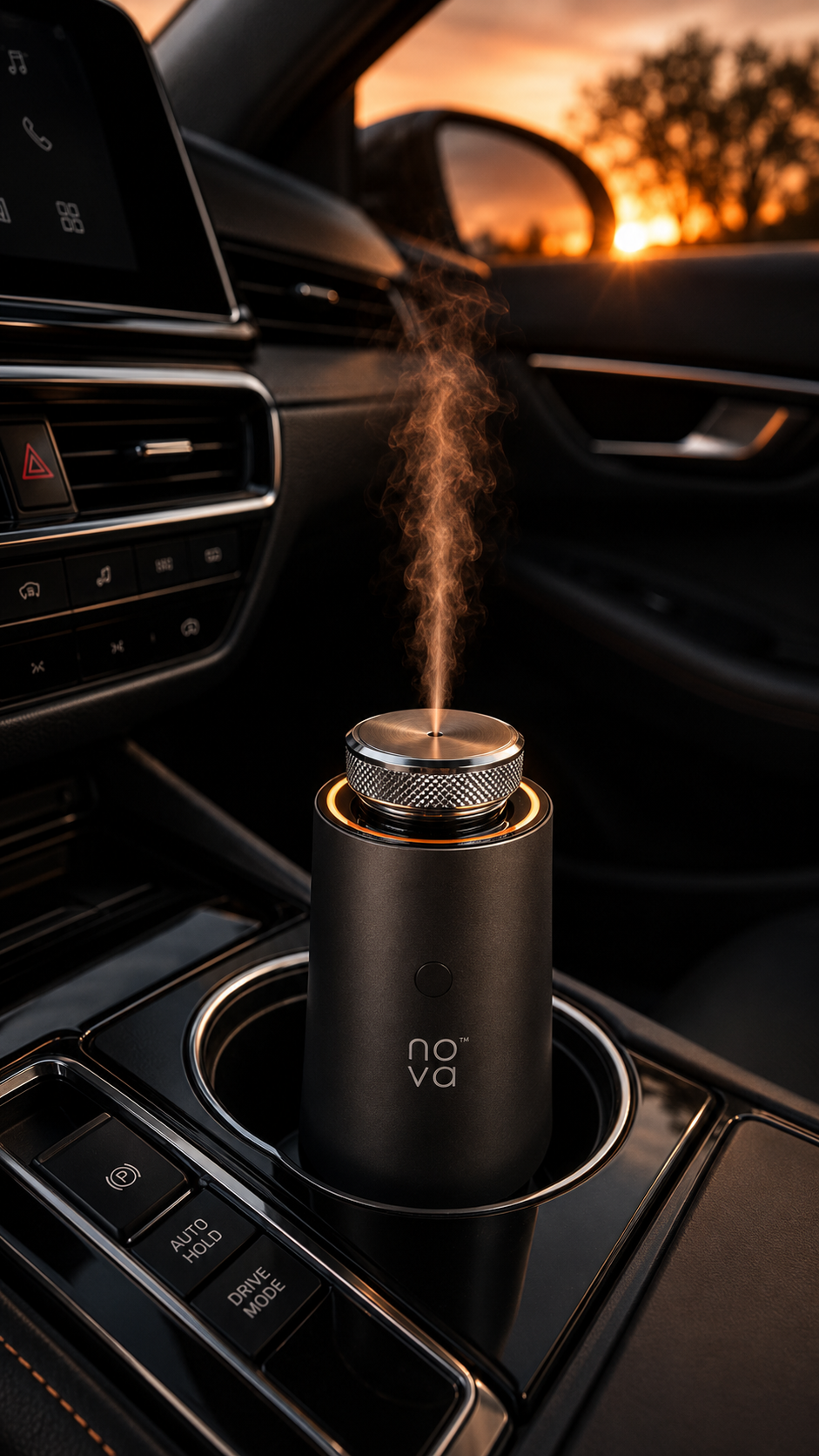
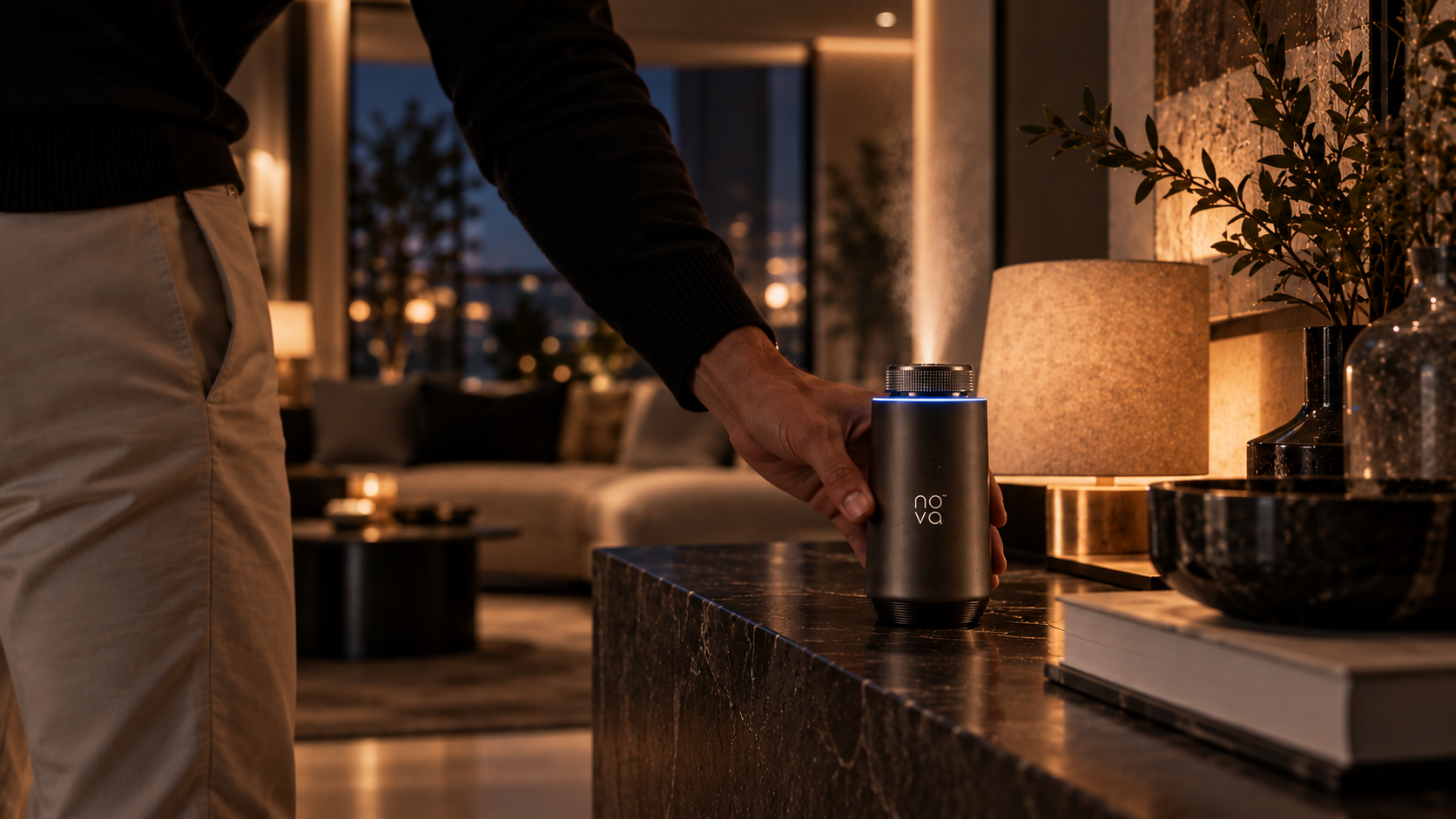
The Nova Pod brings cold-air diffusion technology to home use. The difference in quality compared to conventional home fragrance methods is immediately apparent — a cleaner, more consistent, and more faithful fragrance experience.
Intensity: The Most Overlooked Variable
The single most important factor in whether a room smells luxurious or merely scented is intensity.
Luxury fragrance experiences are subtle. The fragrance is present but not identifiable — guests and visitors feel its effect without being able to point to it as a smell. This is the mechanism that makes scent so powerful: it influences mood at a subconscious level, before conscious evaluation intervenes.
If people walk into your space and immediately say "it smells nice in here", the intensity is probably too high. If they simply feel comfortable, at ease, and vaguely positive about the space without knowing why, you have got it right.
Start at the lowest possible intensity and adjust upward very gradually. The goal is ambient, not assertive.
The Role of Consistency
A fragrance only becomes a genuine sensory identity when it is experienced reliably. The hotels and retail spaces that use scent most effectively do not rotate between different fragrances — they choose one, commit to it, and use it consistently every day.
This consistency is what creates the association between the scent and the space. Over time, the fragrance becomes inseparable from the experience of being in that environment. Guests who return to a hotel and encounter the same scent feel an immediate sense of familiarity and comfort. The fragrance has become a brand asset.
The same principle applies at home. Choose a fragrance you genuinely love, use it consistently, and give it time to become part of the sensory identity of your space.
Choosing the Right Fragrance for Your Space
Different spaces call for different fragrance approaches.
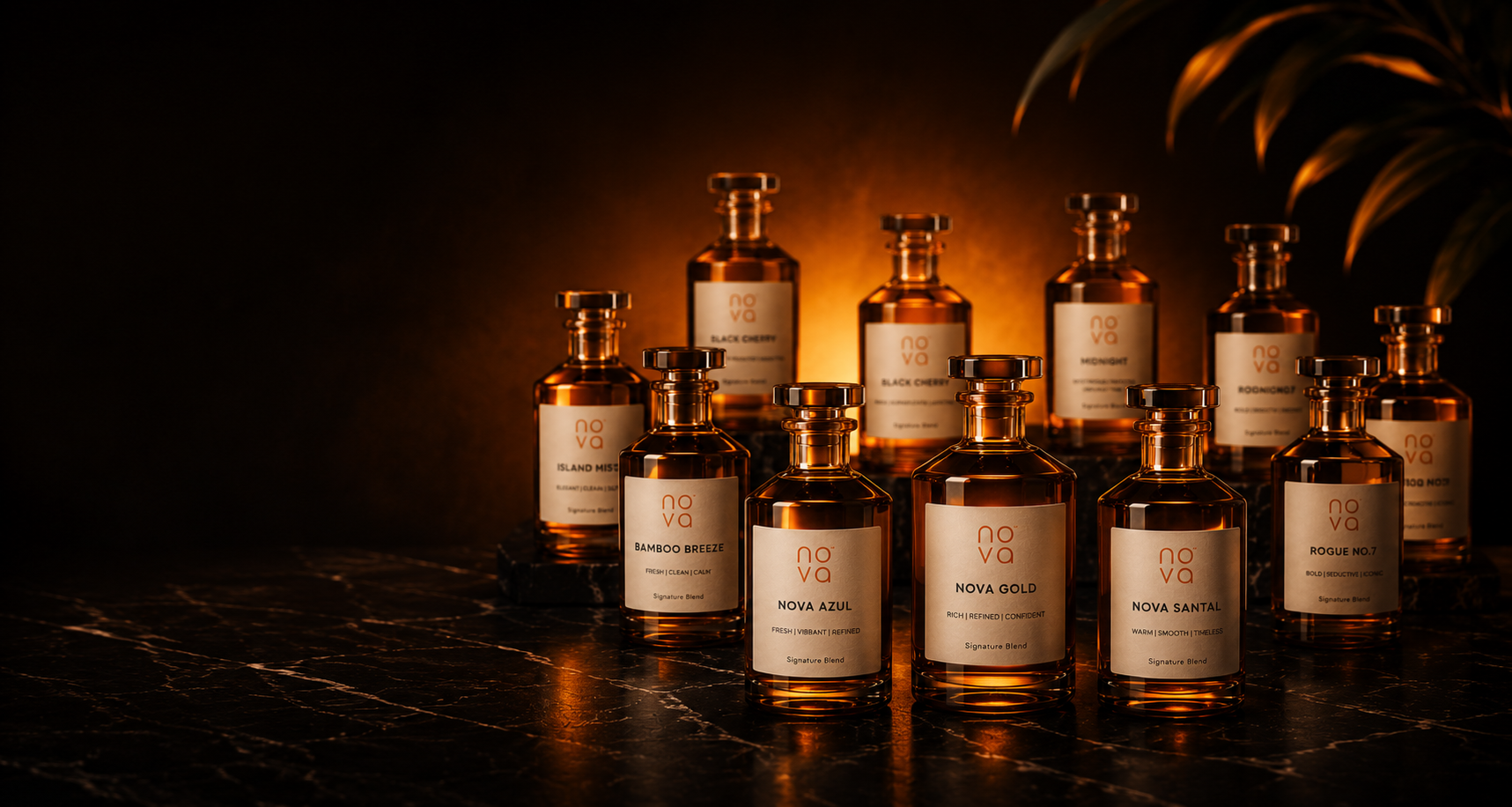
Living rooms and entrance halls benefit from warm, welcoming fragrances — amber, sandalwood, and subtle spice notes that create a sense of arrival and comfort. Nova Gold from the Nova Mist collection is well suited to this.
Bedrooms work best with clean, calming fragrances — white musk, light florals, and subtle woody notes that promote relaxation without being heavy. Bamboo Breeze or Midnight are good choices here.
Home offices and studies benefit from clean, slightly energising fragrances — green tea, citrus, and light aquatic notes that promote focus without distraction. Nova Azul works well in this context.
Bathrooms and utility spaces respond well to clean, fresh fragrances that feel spa-like rather than functional. Something light and aquatic creates the impression of a considered, premium environment.
Explore the full Nova Mist fragrance collection to find the right match for each space in your home.
Putting It Together
A room smells luxurious when three things are true simultaneously: the fragrance itself is genuinely premium, the delivery method is consistent and clean, and the intensity is calibrated to influence mood rather than announce itself.
None of this requires a large budget. It requires the right approach — the same restraint and attention to detail that distinguishes a genuinely considered interior from a merely decorated one.
The Nova Pod is designed to make that approach straightforward. Cold-air diffusion technology, app-controlled intensity and scheduling, and a fragrance library developed for exactly this kind of considered sensory environment.