Most people's experience of fragrance delivery involves heat. A candle. A reed diffuser. An ultrasonic humidifier that turns water and fragrance oil into a visible mist. These are familiar, accessible, and — for domestic use in small spaces — often adequate.
For professional environments, they are not.
The Problem with Heat
When fragrance oil is heated — whether by a candle flame, a warming plate, or the ultrasonic vibration that generates heat as a byproduct — the molecular structure of the fragrance changes. Heat breaks down the more delicate aromatic compounds, altering the scent profile and reducing its complexity. What you smell is a simplified, often harsher version of the original fragrance.
Heat also introduces practical problems in commercial settings. Open flames are a fire risk. Ultrasonic diffusers require water, which means humidity, potential for mould, and the risk of water damage to surfaces and electronics. Warming plates and heated diffusers consume more energy and require more maintenance.
None of this is acceptable in a hotel lobby, a car showroom, or a professional office environment.
How Cold-Air Diffusion Works
Cold-air diffusion takes a fundamentally different approach. Instead of heating the fragrance oil, it uses compressed air to atomise it — breaking the oil into microscopic dry particles, typically between one and three microns in diameter, without any heat whatsoever.
These particles are small enough to remain suspended in the air for extended periods, distributing evenly throughout a space rather than settling on surfaces. Because no heat is involved, the fragrance molecules remain intact. The scent you experience is the scent as it was formulated — with its full complexity, its top notes, its depth, its character.
The result is a cleaner, more consistent, and more faithful fragrance experience than any heat-based system can deliver.
Dry Particles, Not Mist
One of the most important distinctions in cold-air diffusion is that the output is dry. The particles are so small that they evaporate almost instantly on contact with the air, leaving no residue on surfaces, no moisture in the environment, and no visible mist.
This matters for several reasons. It means the system is safe to use near electronics, fabrics, artwork, and sensitive materials. It means there is no humidity increase in the space. And it means the fragrance experience is invisible — guests and customers experience the scent without seeing any mechanism that might draw attention to it.
Consistency and Control
Professional cold-air diffusion systems offer a level of control that heat-based alternatives cannot match.
Intensity can be adjusted precisely — from a barely perceptible background note to a more present ambient fragrance — without changing the character of the scent. Scheduling allows different intensities at different times of day, or different fragrances in different zones. Remote management means a business operating multiple locations can maintain consistent scent standards across all of them from a single interface.
This level of control is what makes cold-air diffusion the technology of choice for serious scent marketing programmes. It is not simply a better way to make a space smell pleasant. It is a platform for managing fragrance as a deliberate, consistent element of the brand experience.
What to Look for in a Professional System
Not all cold-air diffusion systems are equal. A few considerations when evaluating options:
Atomisation quality. The particle size matters. Systems that produce larger particles will leave residue on surfaces and deliver an inconsistent scent experience. True cold-air diffusion produces particles small enough to remain suspended and evaporate cleanly.
Fragrance compatibility. Professional systems should work with pure fragrance oils, not diluted solutions or proprietary cartridges that limit your fragrance choices. The quality of the fragrance oil is as important as the quality of the diffusion technology.
Build quality. A device that will run continuously in a commercial environment needs to be built to a standard that reflects that use. Aluminium construction, precision engineering, and components designed for longevity are worth paying for.
Control and connectivity. App-based control, scheduling, and the ability to manage multiple units remotely are not luxuries in a commercial context — they are practical necessities for any business operating at scale.
Noise. Some diffusion systems are audible. In a quiet reception area or a premium retail environment, an audible diffuser is a problem. The best systems operate silently.
The Nova Pod Approach
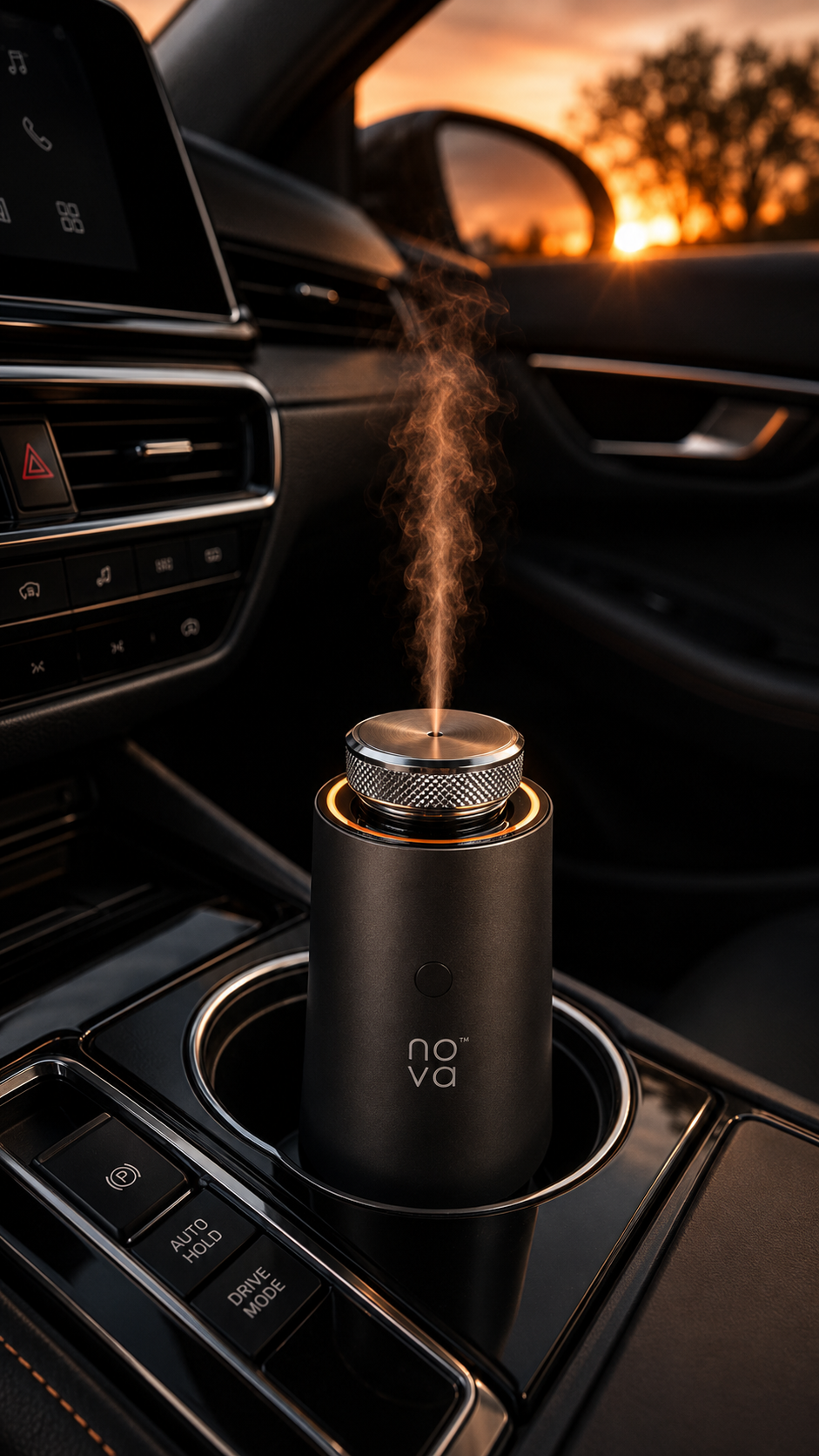
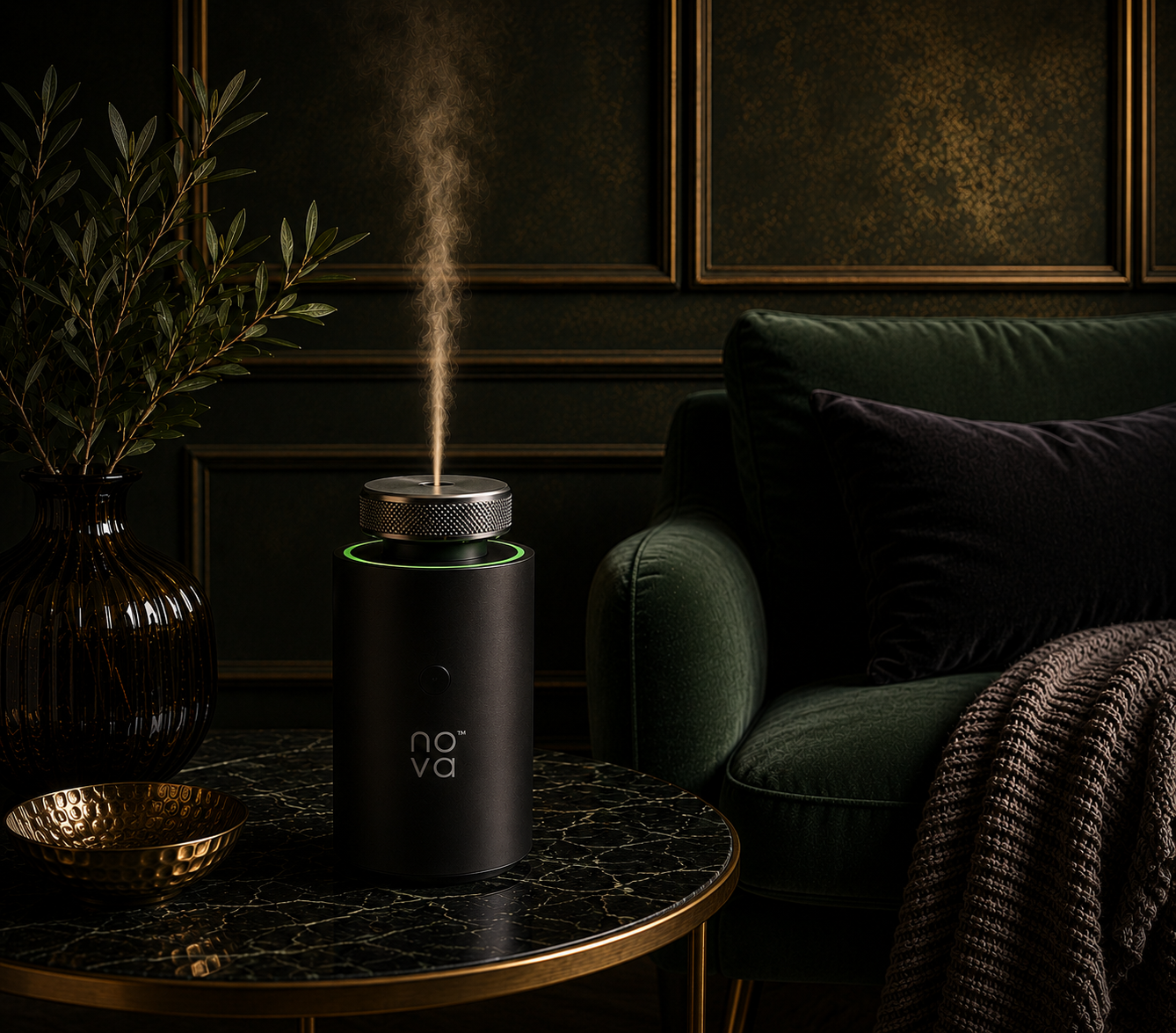
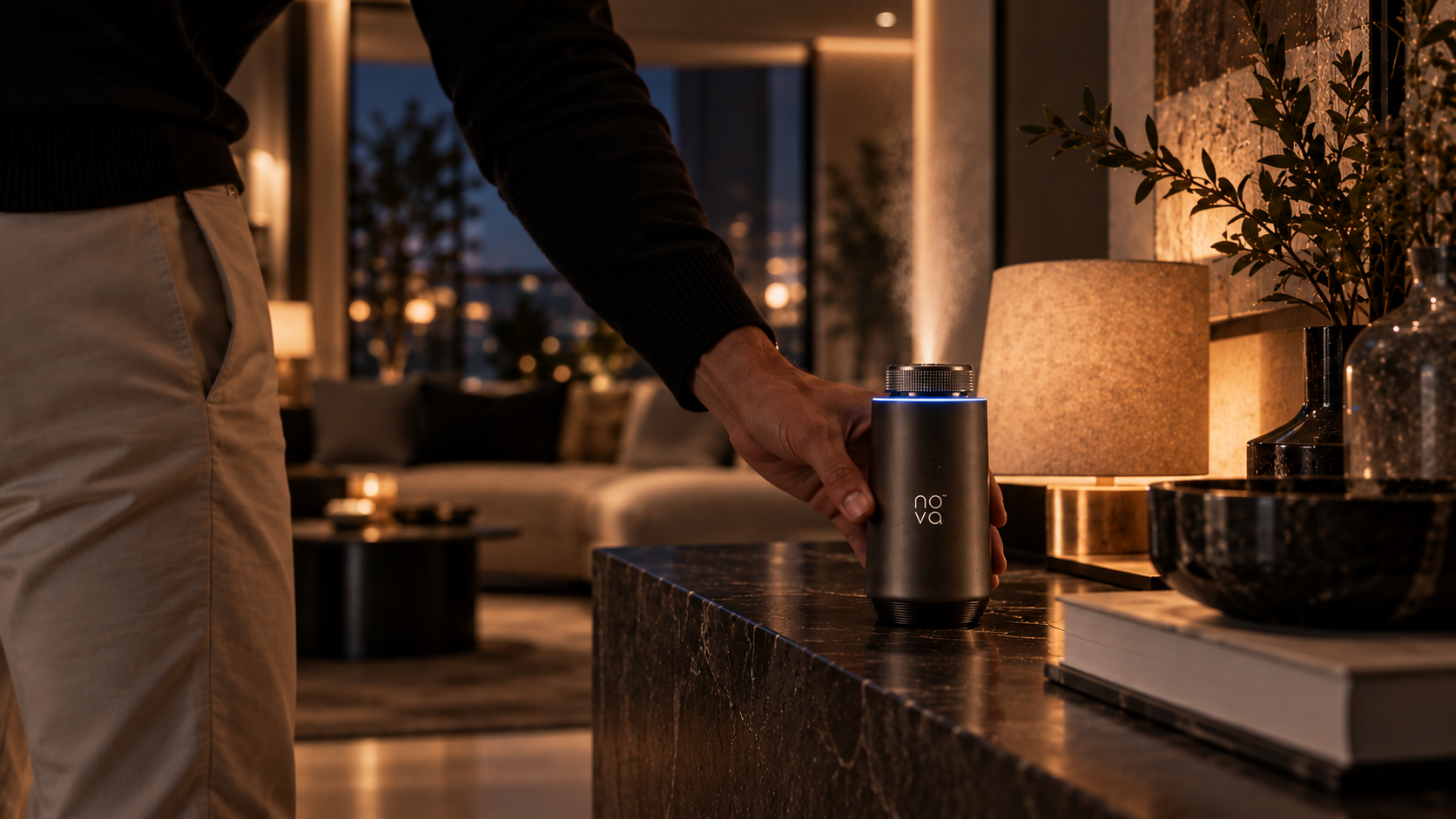
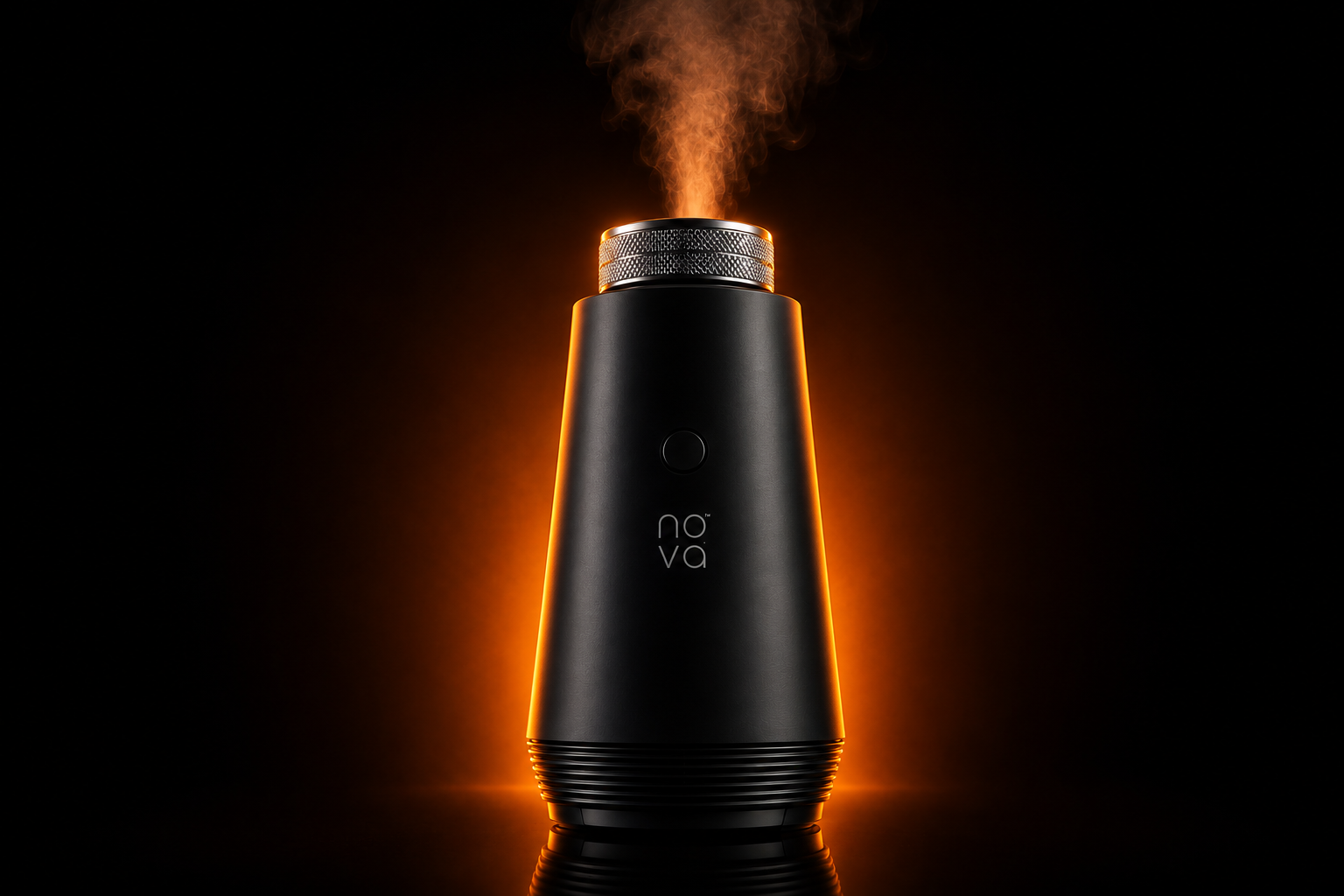
Nova Pod was designed from the ground up as a cold-air diffusion system for professional and domestic use. The aluminium construction, the precision atomisation chamber, and the app-controlled scheduling reflect a considered approach to what a modern fragrance diffuser should be.
The technology delivers fragrance as it was intended to be experienced — without heat, without water, without compromise. Whether in a hotel lobby, a car showroom, a home office, or a living room, the result is the same: a clean, consistent, and genuinely premium scent experience.
Cold-air diffusion is not a new technology. But it remains the right technology — and understanding why it works is the first step to understanding what a serious scent programme can achieve.
Discover the Nova Pod — Nova Mist's cold-air diffusion device for home and professional use. Or explore how to make your home smell like a luxury hotel using the same technology.